
Your natural blue quotations look 3-10x higher than synthetics. Here’s what those numbers actually hide.
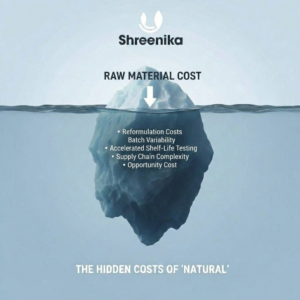
Surface-level cost comparisons between natural and synthetic colorants miss 40-60% of total landed costs. B2B buyers conducting rigorous TCO analysis find:
- Reformulation costs: $50-250K+ per SKU to accommodate natural pigment limitations (pH adjustments, stabilizers, modified processing). Multiply by product portfolio size.
- Batch variability: Natural extracts vary 10-30% in color strength batch-to-batch, requiring additional QC testing, increased safety stock, and frequent process adjustments
- Accelerated shelf-life testing: Reduced stability means shorter best-by dates, higher waste from unsold inventory, and increased reverse logistics costs
- Supply chain complexity: Agricultural raw materials introduce seasonality, weather risk, and multi-tier traceability requirements (especially for EU compliance)
- Opportunity cost: Delayed product launches, limited color palette options, and innovation constraints from pigment performance limitations
A food manufacturing case study showed that switching from Brilliant Blue FCF to anthocyanin extracts increased all-in costs by 2x or more, much greater than the raw material premium alone. Half that delta came from operational complexity.
The bio-manufacturing value proposition: production consistency rivaling synthetics, with full traceability, predictable supply, and none of the agricultural variability.